
If you’ve ever sat down to write your book and felt like your ideas were all over the place, you’re not alone. Many aspiring authors start with a great book idea, but when they go to turn it into a first draft, it feels overwhelming. Without a clear structure, your book can read more like a jumble of thoughts than a bestselling book.
Here’s the good news: there’s a simple way to fix this. It’s called your signature framework.

When you build your book around a framework, you give both yourself and your readers a roadmap. It makes the writing easier and the reading more enjoyable. And because I come from a background in education and curriculum design, I can tell you this: readers, just like students, thrive when the information is clear and easy to follow.
Why Frameworks Work (The Curriculum Design Connection)
I spent 15 years working in education, first in the classroom, then as an instructional coach and curriculum designer. In education, we use frameworks to break down complex material into smaller, digestible steps. Frameworks also make concepts more memorable, which aids in implementation and transferring the skills to broader contexts.
If you’re a service provider, consultant, or mental health professional, you want your clients to do the same with what you teach. If you’re writing a book, that focus will make your book one that gets shared because the people who read it will achieve results based on your recommendations. Results lead people to share. Shared books become bestsellers and establish thought leadership.
A strong framework:
- Gives your book direction.
- Helps your reader remember and apply your message.
- Positions you as an authority with a repeatable process (a key factor if you want to become a successful author).
This is one of the biggest differences I see between manuscripts that stall out in self-editing and those that move forward toward a real book deal. Frameworks turn chaos into clarity.
When I’m working with a client or someone I meet at a conference, identifying their framework involves lots of listening and pattern identification while they tell me about their work and their clients.
Example: My Reader First Framework
I use a framework for helping authors craft books that resonate deeply with their target audience using my Reader First framework.
The basic steps are:
- Clarify Your Message
- Deep Dive into Your Die-Hard Reader
- Connect with Stories
To have a framework, you have to first have something you teach or do for clients that works. You have to have practiced and refined the process until it’s repeatable. If you don’t have that yet, keep practicing your work until you find yourself saying the same things on repeat.
To identify the Reader First framework, I used the same process I use with my clients on myself, with the help of a bit of AI. I’ll get to that in a minute. First, let’s look at the steps for identifying your framework.
How to Discover Your Signature Framework
I’m about to present a framework for discovering your framework – very meta.
Here’s a simple process to get started:
- Reflect on your expertise. What problems do you consistently help people solve? What are you known for? If you had to teach a workshop tomorrow to a group of 50 of your ideal clients, what would you choose to teach?
- Identify your method. What steps, principles, or pillars do you return to again and again? Are these things you’ve created from scratch or ones you’ve altered from existing methods used by others?
- Look for patterns. Do your lessons naturally fall into three stages, four parts, or a cycle? These patterns will eventually reveal the parts of your framework
- Look for differentiation. In order for a framework to be yours, it has to be a bit different than what others in your field are doing. I had a client who did something with her clients that resembled a SWOT analysis, but instead of looking at weaknesses, she did things a bit differently. That difference means she can claim it as her framework.
- Test it. Can you explain it simply? Could someone else repeat it back to you? This is typically one of the hardest parts for clients I work with, until they start working with us to tease out the ideas. If you struggle, invite another business owner to lunch and ask them to help you work it out, or schedule a call with me.
Pro tip: Build your framework with your reader in mind. Remember, you’re not just writing for yourself. You’re writing books to serve your target audience and help them succeed. Focus on what they need and what they think their problem is.
How to Use Your Framework to Organize a Book
Here’s where things get fun. Once you’ve got your framework, you can use it to outline your entire book.
- Each part of your framework can become a section, chapter, or theme.
- Your reader gets a clear journey with a beginning, middle, and end (no rambling backstory or confusing tangents).
- You, as the author, get rid of the overwhelm. Writing flows more naturally when you’re following a template.
This is why so many bestselling authors, whether they go the self-publishing route on Amazon or land a deal with traditional publishing houses, rely on frameworks. It organizes your writing, and organized writing is easier to read. When a book is easy to consume, people get results because you lower the barrier between knowledge and action. Those results cause them to recommend your book to others.
Turn Your Framework Into a Book
If you’re ready to get your ideas out of your head and onto the page, here are two clear next steps:
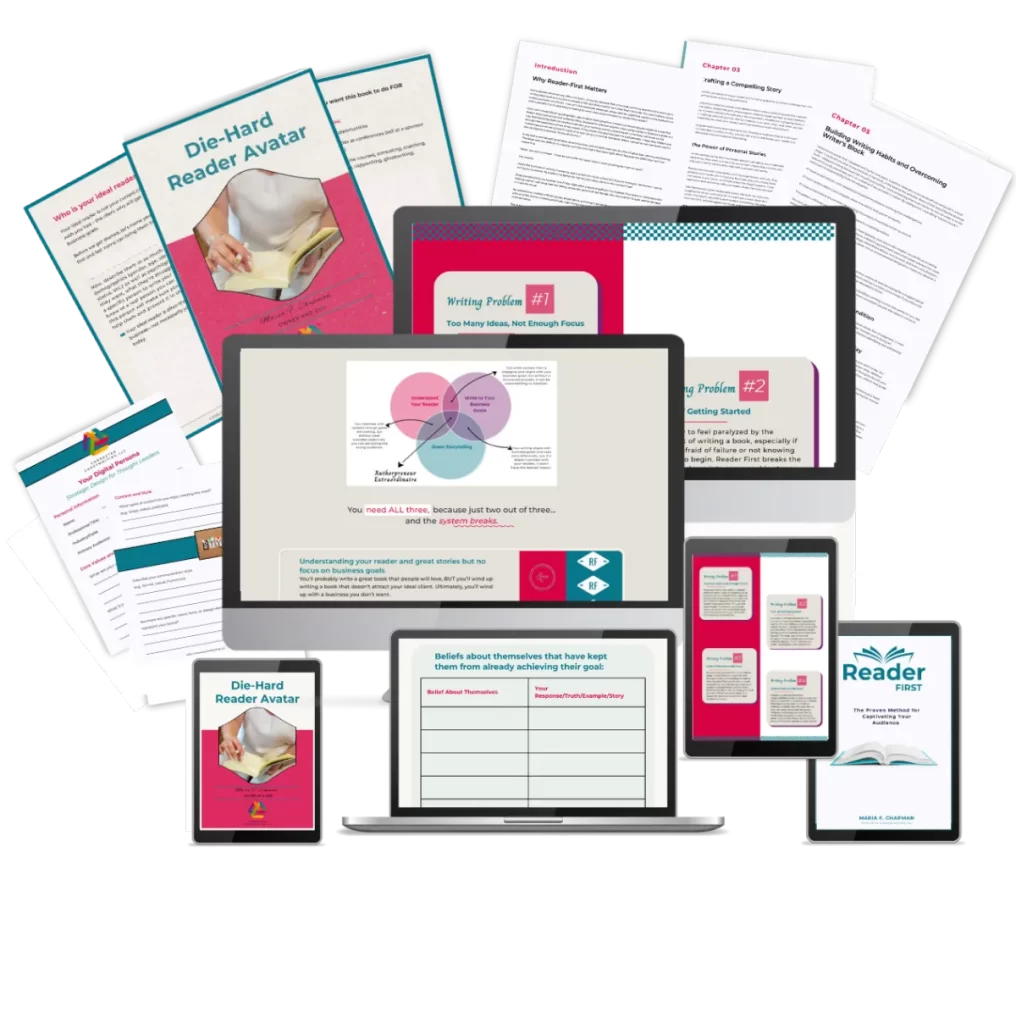
- Download the Book Writing Starter Kit. This free resource will help you organize your ideas and start shaping your framework into a nonfiction book.
- Schedule a consultation with me. Together, we’ll define your unique signature framework and turn your book idea into the backbone of a potential bestselling book.