You have a book idea that won’t leave you alone. Maybe it came to you in the middle of a walk, or during a conversation with a friend, or maybe it’s been tugging at your heart for years. You’ve lived the story, you know the chapter outline by heart, and you feel a deep calling to share it. But when you start researching how to get published, all the advice sounds… corporate. Formal. Like you need to put on someone else’s blazer and smile through clenched teeth.
Let’s rewrite that.
Writing a Winning Non-Fiction Book Proposal
As a ghostwriter and coach who works with mission-driven authors, I want to demystify the nonfiction book proposal process and offer you a different way forward—one that honors your voice, your values, and your vision.
This post is your in-depth guide to writing a nonfiction book proposal that still gets a yes from agents and publishing houses—without losing your soul in the process. And if you want a more hands-on version, I’ve created a downloadable Google Doc you can use right now. Get the free Book Proposal Template here.
Why You Need a Book Proposal (Even If You’re Self-Publishing)
A nonfiction book proposal isn’t just a formality. It’s a foundation. Whether you’re querying a literary agent, pitching university presses, or even self-publishing, a proposal gives you clarity on what your book is really about, who it’s for, and how you’re going to reach them. It’s your way of saying, “Here’s the story I’m here to tell, and here’s why it matters.”
For traditional publishing, a nonfiction book proposal is essential. Most publishers do not want a full manuscript upfront—they want a clear, compelling proposal with a few sample chapters. A strong proposal can lead to a book deal before you finish the entire book.
Not sure where to start on your proposal?
Book a free 15-minute call and we'll help you map out your book's structure and positioning.
Book Your Free ConsultationWhat Goes Into a Nonfiction Book Proposal?
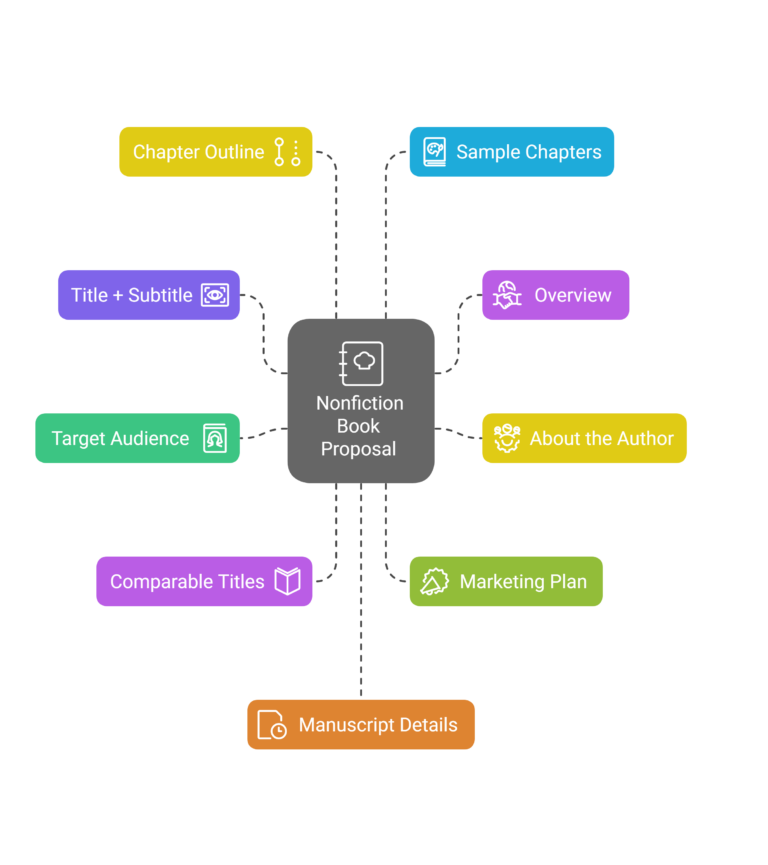
Here are the key components of a book proposal, whether you’re working with a literary agent or submitting directly to publishing houses:
| Section | What It Proves to an Agent | Typical Length |
|---|---|---|
| Title + Subtitle | You can position the book clearly in one line | 1-2 lines |
| Overview | There's a real audience and a real hook | 2-4 pages |
| About the Author | You're credible enough to write this book | 1 page |
| Target Audience | You know exactly who buys this and why | 1 page |
| Comparable Titles | You understand the market and where you fit | 1 page |
| Marketing Plan | You can help the book actually sell | 1-2 pages |
| Chapter Outline | The book has a clear structure start to finish | 3-10 pages |
| Sample Chapters | You can actually write the book | 20-40 pages |
| Manuscript Details | You have a realistic delivery timeline | 2-3 lines |
Common Mistakes First-Time Authors Make
- Writing in a voice that doesn’t feel like your own
- Being too vague about your target audience
- Assuming your social media presence doesn’t matter (it does—but it doesn’t have to be huge)
- Trying to be all things to all people instead of focusing your message
- Ignoring the value of comp titles and market context
What About a Query Letter?

Why I Wrote This Template
I’ve worked with dozens of brilliant, intuitive, wise entrepreneurs who have world-shifting ideas—and who shut down the minute they see a writing a book proposal on their to-do list.
That’s why I created this book proposal template: to help you bring your full self to the publishing process. And if you’re weighing whether to bring in outside help for the proposal itself, here’s how that kind of project is typically priced. You just have to write clearly, powerfully, and with intention.
Frequently Asked Questions
Frequently Asked Questions
How long should a nonfiction book proposal be?
Most run 20-40 pages once you include sample chapters. The written sections alone (overview, audience, comp titles, marketing plan, and chapter outline) usually total 10-15 pages before you add sample chapters.
Do I need a proposal if I'm self-publishing?
You don't need one to submit to an agent, but writing one still sharpens your thinking about audience, positioning, and marketing before you spend months writing the full manuscript.
How many comparable titles should I include?
Five to ten is standard. Fewer than five makes it look like you haven't researched the market. More than ten starts to dilute your own book's distinctiveness.
What's the difference between a query letter and a proposal?
A query letter is a one-page pitch that gets an agent to ask for your full proposal. The proposal is the complete document, usually requested only after the query gets a positive response.
Can a ghostwriter help me write my book proposal?
Yes. Many authors bring in a ghostwriter or coach specifically for the proposal stage, since it requires a different skill set (marketing and positioning) than writing the book itself.
Download the Free Book Proposal Template
If you want help organizing your thoughts and writing a proposal that truly sounds like you, download my free Book Proposal Template here.
It covers everything mentioned above in a simple, fill-in-the-blank format designed for nonfiction authors who are ready to pitch their first book, finish a complete manuscript, or explore traditional publishing without losing their voice.
This template will walk you through each section, helping you clarify your message, build your author platform, and create a proposal that feels aligned and strategic. Keep in mind, though, that every publisher has a particular style for proposals, so it’s a good idea to look at their requirements and tweak your proposal to fit each publisher or agent you submit to.
Starting With a Proposal Can Help You Finish
Writing a nonfiction book proposal is about more than getting a yes from a literary agent or publishing house. It’s about owning your message. About naming your selling point with clarity and conviction. About honoring your writing style and making space for the wisdom that only you can share.
And if you’re sitting there wondering if your book idea is “good enough,” here’s what I’ll say: If it won’t leave you alone, it’s time.
Don’t wait until the entire book is perfect or the timing feels right. Start with the proposal. It will guide your writing, sharpen your thinking, and help you move your book from dream to reality.
You already have the voice.
You already have the story.
You already have the calling.
Now let’s get it on the page.
Ready to shape your book idea into a winning proposal? Book your free consultation today.